Go to Home Page Books written by Dennis Waite Terms and Definitions Essays and other writings Links to other sites Teachers of Advaita Recommended reading Advaita Bookstore History of additions to site Questions and Answers

The Spiritual Path          


of Advaita

advaita.org logo
Teachers flower picture

This section is divided into seven categories:

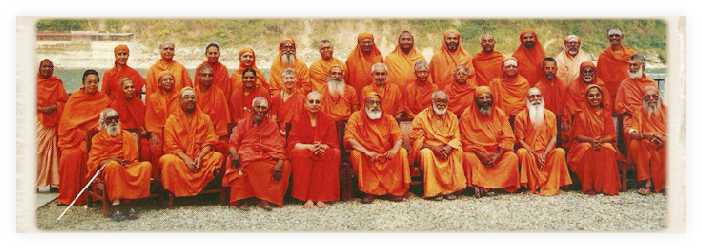
Traditional Teachers and acknowledged sages

There are several sages who now have established traditions with organisations and/or disciples around the world propagating their teaching. These sites could have been listed in the Resources section under 'Organisations' since they usually offer courses on Advaita but it seems more appropriate to put them here since most of them also sell books and videos specifically relating to their effective founder and frequently do not market any other material.

1. Swami Chinmayananda and his disciples, operating through many branches of the Chinmaya Foundation.

2. Sri Ramakrishna and Swami Vivekananda, operating through various temples and other organisations.

3. Sri Ramana Maharshi, represented by a number of unrelated organisations in various parts of the world.

4. Nisargadatta Maharaj - there are many sites acknowledging the wisdom of this sage. There are also a number of satsang teachers claiming association or discipleship. It is understood, however, that he did not formally designate a successor in his lineage (the Navnath saMpradAya) and some of the more recent teaching often more nearly resemble neo-advaita than traditional. Accordingly, his successors are listed in the 'Western satsang' section.

5. Other Traditional Teachers - this page includes such teachers as Swamis Dayananda and Paramarthananda, who will undoubtedly be acknowledged as sages by later generations.

Direct Path

The single page in this section covers those teachers who effectively follow the teaching methods of the sage Sri Atmananda Krishna Menon. Though non-traditional, this represents a rigorous, formal and logical approach.

Western Satsang

Those western teachers (whether living or deceased), who provide non-traditional teaching through the medium of satsang, are listed here alphabetically according to their surname. Note that these pages do not attempt to assign any priority or indication of authority. The only criterion for a teacher being listed here is that I have encountered some of their written material at one time or another and found it inspiring to some degree. Many will not be listed simply because, although I may well have heard of them, I simply have no direct acquaintance with their teachings and so have been unable to form any opinion. It should be noted that, as described in detail in my book 'Enlightenment: the Path through the Jungle', I cannot recommend the 'satsang' style of teaching as a viable path to enlightenment, even though the teacher may be accomplished.

The teachers are grouped as follows:

     1. A - G - From Robert Adams to John Greven.

     2. H - L - From Burt Harding to Wayne Liquorman.

     3. M - O - From Frnklin Merrel-Wolff to Osho.

     4. P - Z - From H. W. L. Poonja to Stephen Wingate.

Neo-advaitin teachers

Many of the new satsang teachers in the west attempt to communicate the direct truth about the nature of reality and do not acknowledge the existence of seekers, teachers, paths or even enlightenment. Such (non-)teaching has come to be known as neo-advaita. Some of what is said and written by these teachers is interesting and may even be 'true' from a pAramArthika standpoint but is not likely to be of much help to other than 'advanced seekers'. This page lists some of those teachers.

Databases and Satsang Schedules

A number of people have been building up databases of teachers over the years, containing varying amounts of biographical detail and information about their teaching. Some also attempt to assess their ability or authenticity and can be quite scathing about those of whom they do not approve!

There are many modern Sages who periodically engage in tours to various countries where they give short satsangs, weekend 'intensives' or residential courses. Most of the students who attend these sessions have been 'seeking' for many years and are very knowledgeable in the theory. Consequently, many of the questions that are posed are from the vantage point of this extensive knowledge and may go 'over the heads' of novices. It is therefore advisable that one studies and practises sufficiently to know what one is talking about before searching out a teacher. (Ideally, one should also read the book mentioned above so as to be aware of the many pitfalls.)

Before the advent of the Internet, of course, it would almost certainly have been the case that only the very serious seeker could have found a teacher in the first place. Nowadays, though, anyone who can use the search engines can find the nearest venues with very little effort. This means that someone with only a passing interest in the subject can turn up and disrupt a group by asking silly questions. If you have reached the stage of needing answers from someone who actually has them, the task of deciding who to see can be daunting. Here, the Internet definitely comes into its own. It is possible to find information about them and download samples of their dialogues. It is then relatively easy to discover someone whose language seems to strike a chord.

Teacher Lineages

This is an attempt to provide 'organisation chart' formats for all of the well-known and present day teachers, showing teacher-disciple lineage. The lineages covered are: Shankara, Sivananda, Ramakrishna, Ramana Maharshi, Nisargadatta Maharaj, Osho, Atmananda Krishna Menon and Adyashanti. A separate chart covers those teachers with no specific lineage. Over 200 teachers are represented.

Advaita Timeline

A timeline has been provided to attempt to show the history of the development of the Advaita philosophy, from the oral tradition of the Vedas around 1500 BCE through to the modern teachings of neo-Advaita. Apart from the lives of recent teachers, most of the dates are only speculative and argued over by historians. Since the world is 'ruled' by mAyA and saMsAra, Hindus have never been overly concerned with accurate recordings of dates!


om
 
Page last updated: 7th Jan 2008